
Technology Expands Courts' Reach, But Judges' Integrity Determines Quality of Justice: CJI Surya Kant
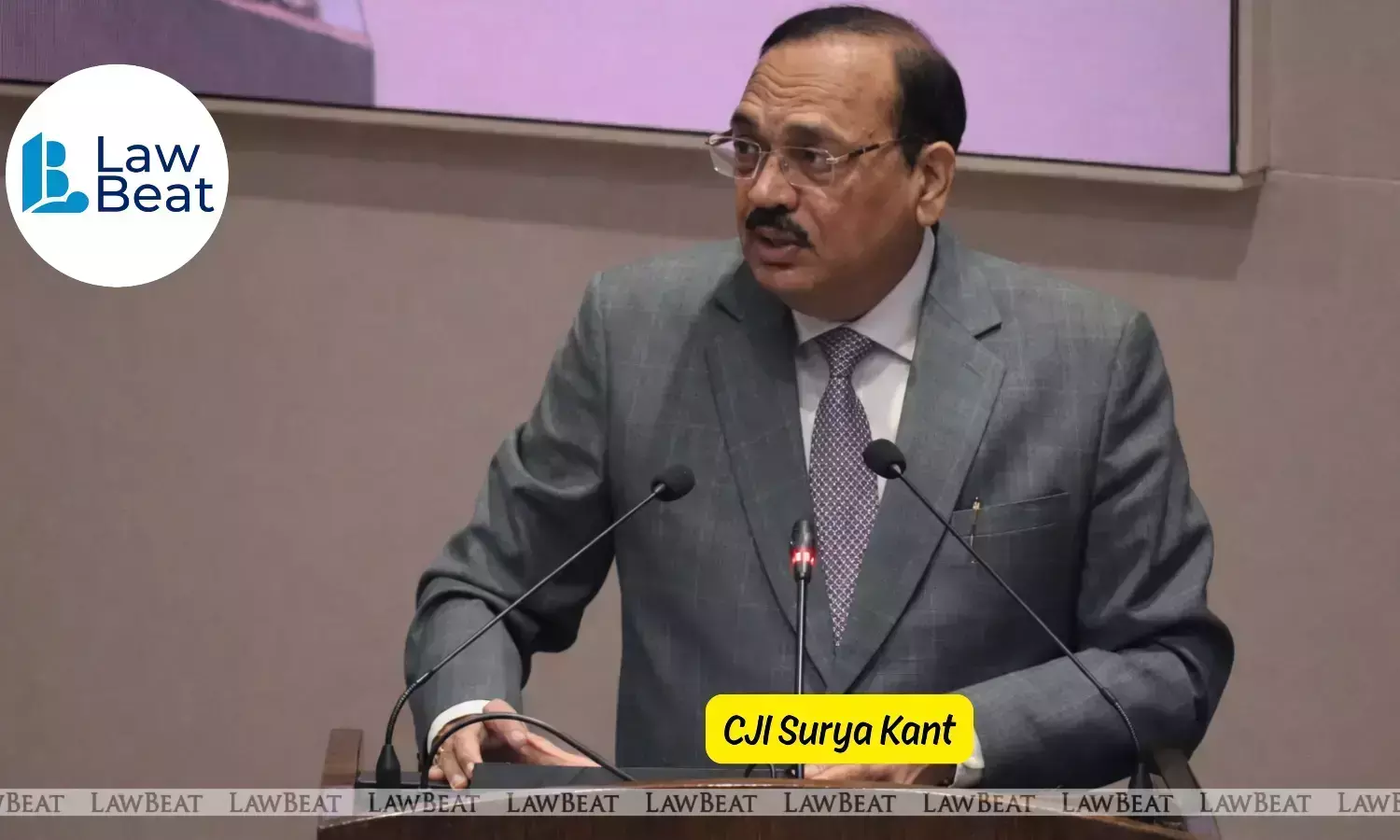
Chief Justice of India Surya Kant delivered the keynote address at the International IDEA Conference in Stockholm, emphasising that the rule of law protects citizens from arbitrary government and that judicial review is a constitutional duty
The Chief Justice of India recently spoke at the Supreme Court of the Russian Federation, Moscow. Speaking on the effectiveness of modern judiciaries, CJI Surya Kant said that it depends on their ability to harness technology intelligently and responsibly.
"While technology may expand the reach of Courts, it is ultimately the learning, integrity, and commitment of the judges who serve within them that determine the quality of justice delivered," CJI Kant has stated.
During his welcome address where he was accompanied by Igor Krasnov, Chairman of the Supreme Court of the Russian Federation, the CJI stressed that technology is an indispensable and integral part of the Justice Delivery System though it need not be utilised to replace judicial values.
Highlighting how Artificial Intelligence is increasingly being used to support judicial administration and legal research, the CJI said, "The Supreme Court of India has developed tools such as SUVAS (Supreme Court Vidhik Anuvaad Software), which facilitates the translation of judicial documents across languages. Judgments in English are translated into 16 regional languages....Recently, we have launched an AI-powered Chatbot, Su Sahay, which functions as a virtual judicial assistant, enabling litigants, lawyers, and members of the public to obtain information about court procedures, case status, filing requirements, and other services through a conversational interface."
CJI added that even as we embrace innovation, we must remain acutely conscious of its limits. "The administration of justice is, and must remain, fundamentally a human endeavour. Artificial Intelligence may assist Judges by organising information, facilitating translations, generating transcripts, and streamlining administrative processes. It cannot determine outcomes, assess witness credibility, evaluate evidence, or exercise judicial discretion," he added.
On the lines of capacity-building, the CJI remarked that while technology enhances the capabilities of courts, it is investment in people that determines how effectively those capabilities are utilised.
"Our ultimate goal is to view judicial education not merely as professional training, but as an investment in the intellectual capital and resilience of the Judiciary itself. As legal systems confront increasingly complex realities, a commitment to continuous learning will remain among the Judiciary's greatest strengths," CJI has said.
As a part of his visit, the Supreme Courts of India and Russia on Tuesday signed a landmark Memorandum of Understanding (MoU) in Moscow to strengthen judicial cooperation, with a particular focus on technology-driven court administration and professional capacity-building. The MoU was signed by Chief Justice of India (CJI) Surya Kant and Chairman of the Supreme Court of the Russian Federation Igor Krasnov during the Indian delegation's visit to Moscow.
The agreement seeks to institutionalise cooperation between the apex courts of the two countries through the exchange of judicial experiences, sharing of best practices in information technology, and programmes relating to professional training and personnel development.
The discussions between the two delegations centred on two key themes: the use of modern and advanced technologies in judicial practice and investment in judicial education, advanced training and capacity-building for court personnel. The MoU marks a significant step in judicial diplomacy between India and Russia and is expected to facilitate greater institutional collaboration between the two Supreme Courts in the areas of technology, training and knowledge exchange.