
Thirupparankundram Murugan Temple: Supreme Court Upholds Prayer Limits for Ramzan, Bakri-Eid
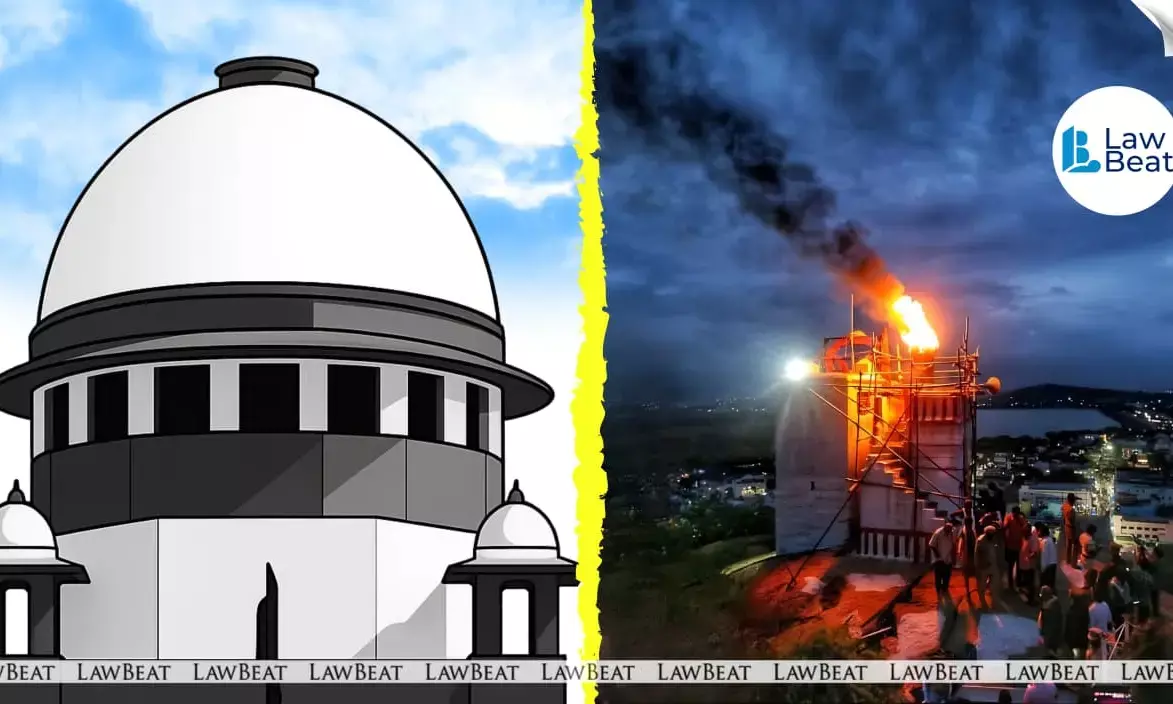
The Supreme Court dismissed the plea, making it clear that the refusal was without expressing any opinion on the merits of the broader issues raised
The Supreme Court on Monday declined to interfere with an order regulating prayers at the Thirupparankundram Lord Murugan Subramaniya Swamy Temple in Tamil Nadu, observing that the decision under challenge appeared to be a “very balanced order.”
Notably, the Madras High Court on October 10, 2025 had prohibited animal sacrifice and the use of the name Sikkandar Malai for the Thiruparankundram Hill in Madurai, while permitting Muslim devotees to offer prayers in the Nellithoppu area only during Ramzan and Bakrid under strict conditions. Justice R. Vijayakumar, acting as third judge after a split verdict between Justices J. Nisha Banu and S. Srimathy had delivered the final verdict in three linked writ petitions filed by S. Paramasivam, M. Kannan @ Solai Kannan, and A.P. Ramalingam of Hindu Makkal Katchi.
Appearing for the petitioner, Advocate Prashant Bhushan contended that the authorities had unjustifiably limited prayers to specific occasions. He submitted that there was no law and order issue warranting such restrictions. “They have restricted prayers only to Ramzan and Bakri-Eid. There was no law and order problem,” Bhushan told the Court.
Responding to the submission, Justice Kumar remarked that if there was no law and order concern, there would have been “no necessity for a peace committee meeting,” indicating that administrative considerations appeared to have guided the decision.
Bhushan clarified that the grievance was limited and specific. “Our grievance is only this; it restricts the prayer only to Bakri-Eid. There is absolutely no reason to deny them prayer at Nelli Thope provided there is no nuisance. Why restrict it only to Ramzan?” he argued, stressing that peaceful prayers should be allowed as long as public order was not affected.
After hearing the submissions, the bench, however, expressed disinclination to intervene. Justice Kumar observed that the order under challenge struck a balance between competing considerations. “Very balanced order. We do not propose to interfere,” the Court said.
The bench ultimately dismissed the plea, making it clear that the refusal was without expressing any opinion on the merits of the broader issues raised.
Importantly, on December 1, 2025, a single judge of the high court had directed the management of the Arulmigu Subramaniya Swamy Temple to light the Deepam at the Deepathoon in addition to the traditional site near the Uchi Pillaiyar Mandapam. The judge observed that the temple authority could not deny devotees’ plea without reasonable basis, and that facilitating the ritual did not infringe the rights of any other community.
The State, joined by the temple management and the Hazarath Sultan Sikkandar Badhusha Avuliya Dargah at Thiruparankundram, filed appeals contending that there was no material on record to establish that the pillar was ever used as a Deepathoon or that there existed a customary right to light the Deepam there. The Advocate General argued before the division bench that neither historical evidence nor temple records supported the assertion of the pillar’s ritual use, and that the single judge had exceeded judicial bounds by effectively creating a new practice without proper foundation
Case Title: M. Imam Hussain v. The Secretary to Government and Ors.
Bench: Justice Aravind Kumar and Justice PB Varale
Hearing Date: February 9, 2026
