
Arvind Kejriwal Moves Supreme Court Against Refusal To Transfer Excise Policy Case From Justice Swarana Kanta Sharma
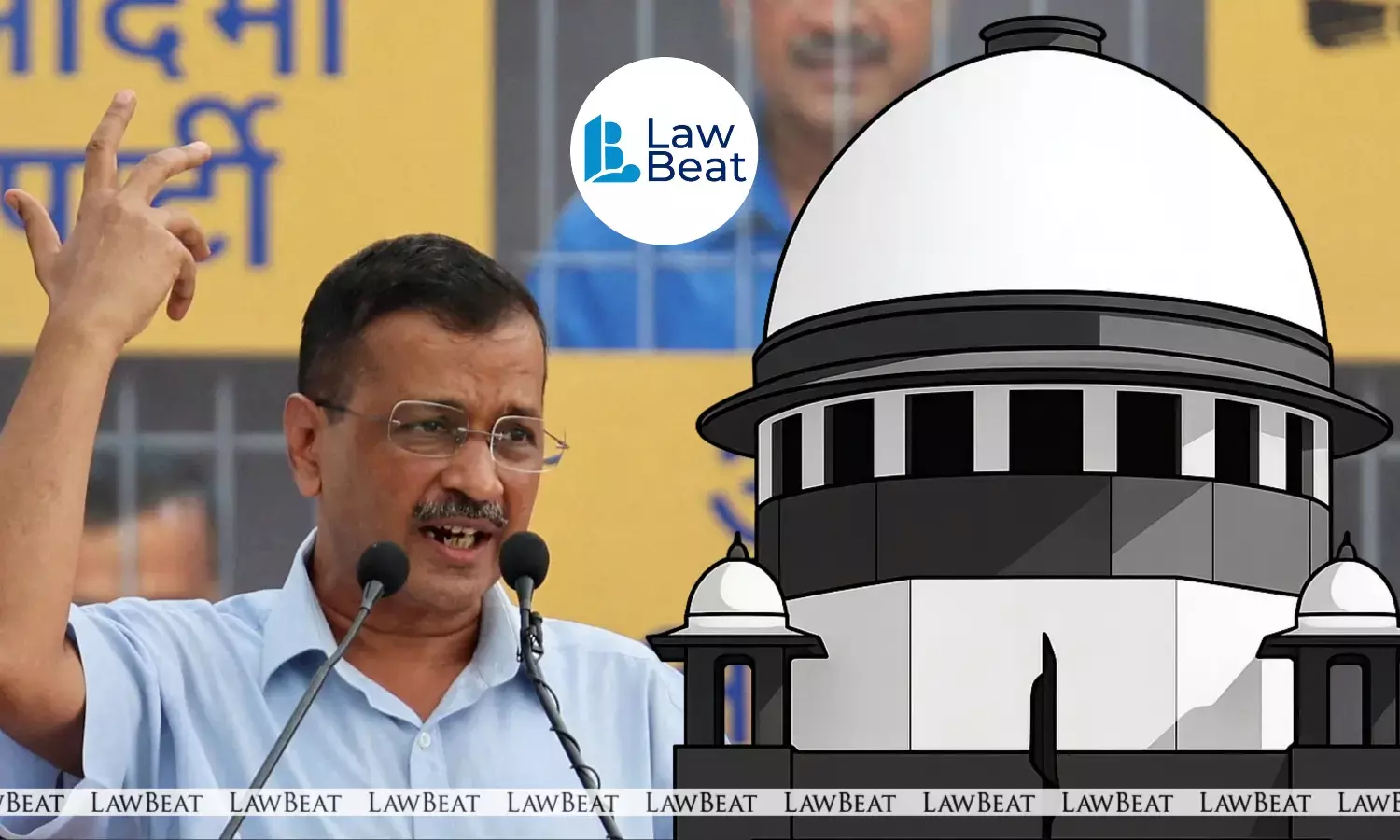
Arvind Kejriwal approached the Supreme Court challenging the Delhi High Court Chief Justice’s refusal to transfer the excise policy case from Justice Swarana Kanta Sharma
Former Delhi Chief Minister Arvind Kejriwal has approached the Supreme Court challenging the decision of the Delhi High Court Chief Justice rejecting his request to transfer the excise policy case from the bench of Justice Swarana Kanta Sharma to another judge.
According to reports, Kejriwal has filed a petition under Article 32 of the Constitution of India. Along with this petition, he has also filed a Special Leave Petition challenging Justice Sharma’s order dated March 9.
In that order, Justice Sharma had stayed a trial court direction to initiate departmental proceedings against a Central Bureau of Investigation officer who had investigated the excise policy case. The High Court had also directed the trial court to defer proceedings under the Prevention of Money Laundering Act, 2002 and observed prima facie that certain findings recorded by the trial court while discharging Kejriwal and 22 others were erroneous.
Earlier, Justice Devendra Kumar Upadhyaya had declined Kejriwal’s request for transfer of the matter. In a communication sent through the High Court’s Registrar General on March 13 to eight applicants, including Kejriwal, the Chief Justice stated that the petition had been assigned to Justice Sharma in accordance with the existing roster.
“The petition is assigned to the Hon’ble judge as per the current roster. Any call of recusal has to be taken by the Hon’ble judge. I, however, do not find any reason to transfer the petition by passing an order on the administrative side,” the communication quoted the Chief Justice as saying.
Kejriwal had written to the Chief Justice on March 11 expressing apprehension that if the matter continued before Justice Sharma, the case “may not receive a hearing marked by impartiality and neutrality.”
The controversy arises from the proceedings linked to the now-scrapped Delhi excise policy case. On February 27, a trial court had discharged Kejriwal and 22 other accused persons in the case. The order was subsequently challenged by the CBI, and the revision petition is currently pending before Justice Sharma.
On March 9, while issuing notice in the revision plea, the High Court stayed the trial court’s direction for departmental action against the investigating officer and also asked the trial court to defer proceedings in the money laundering case, which is based on the CBI’s FIR.
In his letter seeking transfer of the case, Kejriwal argued that the March 9 order did not disclose reasons explaining the “perversity” that justified an ex parte stay on the discharge order. He contended that interim interference with a discharge order is an extraordinary measure that should be exercised only in rare circumstances.
Kejriwal also objected to the High Court’s direction to defer proceedings under the Prevention of Money Laundering Act despite the Enforcement Directorate not being a party to the proceedings.
According to the letter, the grant of such “wide and consequential relief” at a preliminary stage, without hearing the discharged accused, strengthened the apprehension that the revision petition might not be approached with the necessary judicial detachment. Kejriwal further argued that in revision petitions of this nature, courts typically grant four to five weeks for filing responses. However, the pace at which the matter proceeded in the present case, he claimed, created an apprehension of predisposition.
The Aam Aadmi Party leader also pointed out that Justice Sharma had previously dealt with matters arising from the same excise policy controversy and had expressed detailed prima facie views on similar issues. He added that several of those earlier decisions were later set aside by the Supreme Court, which according to him strengthened his apprehension about the fairness of the proceedings.
The petition filed before the Supreme Court now challenges both the refusal to transfer the case and the High Court’s interim directions in the revision proceedings.
Case Title: Arvind Kejriwal v. CBI
Bench: Supreme Court of India (hearing expected)