
Women’s Reservation Push Stalls as Lok Sabha Rejects 131st Constitution Amendment Bill
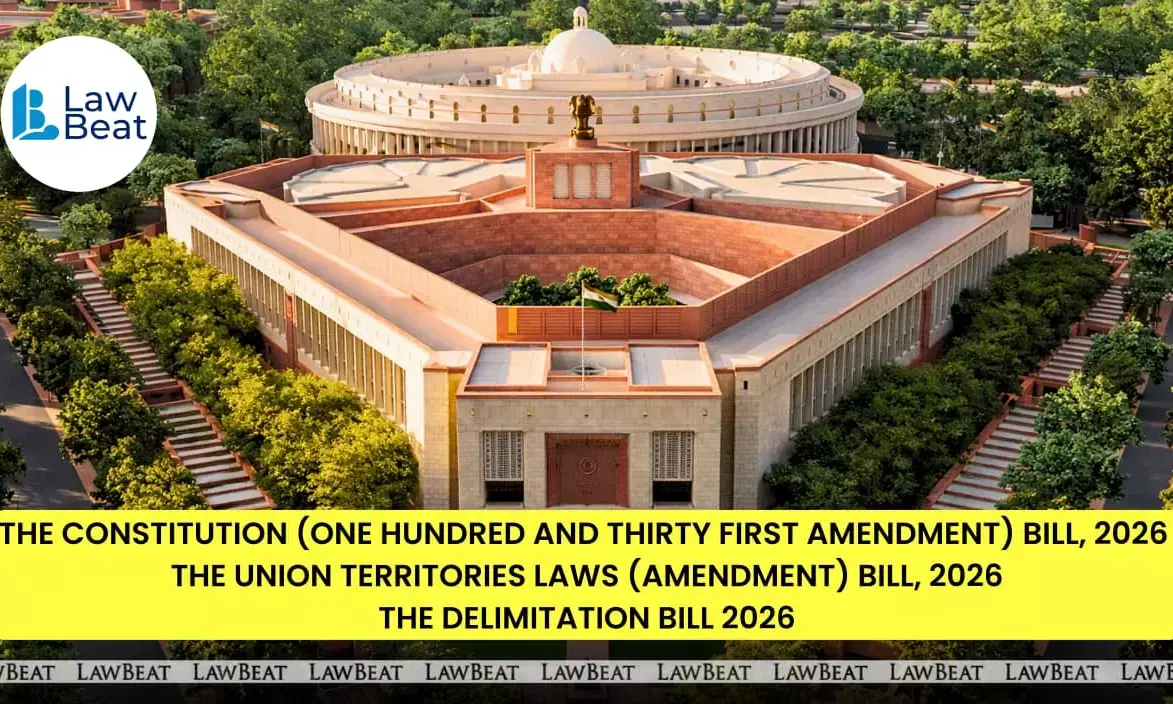
Constitution (131st Amendment) Bill, 2026 falls short of two-thirds majority; Centre withdraws Delimitation Bill tied to Nari Shakti Vandan Adhiniyam, 2023
The Constitution (One Hundred and Thirty First Amendment) Bill, 2026, failed to secure the required 2/3 majority in the Lok Sabha on April 17, 2026, dealing a setback to the Centre’s legislative push to operationalise women’s reservation in legislative bodies and initiate the delimitation process linked to it.
The Bill, a Constitutional Amendment, received 298 votes in favour and 230 against out of 528 members voting.
After the Constitutional Amendment Bill was rejected, the central government withdrew the Delimitation Bill, 2026, and the Union Territories Laws (Amendment) Bill, 2026, which together formed the legislative framework for implementing women’s reservation in Parliament and state Assemblies.
The voting took place following two days of intense debate and objections from Opposition members.
Union Law Minister Arjun Ram Meghwal, who piloted the Constitution Amendment and Delimitation Bills, said the measures were aimed at enabling the rollout of 33% reservation for women without reducing existing seats. He stated that expansion of the Lok Sabha and a fresh delimitation exercise were necessary to give effect to the 2023 constitutional amendment.
The legislative package was linked to the Constitution (One Hundred and Sixth Amendment) Act, 2023, also known as the Nari Shakti Vandan Adhiniyam. While the law has been brought into force, its implementation depends upon a fresh census and delimitation exercise.
Changes the Constitution (131st Amendment) and Delimitation Bills Proposed
The Constitution (One Hundred and Thirty First Amendment) Bill, 2026 sought to expand the strength of the Lok Sabha from 543 to 815 seats to enable implementation of women’s reservation without reducing existing seats. Alongside, the Delimitation Bill, 2026 proposed a fresh framework to redraw constituencies based on updated population data of 2011, while the Union Territories Laws (Amendment) Bill, 2026 aimed to align representation in Union Territories with these changes.
Delimitation was central to this framework as it determines how many seats each state gets and how constituency boundaries are drawn. The process has remained frozen since the 1970s, leaving seat distribution unchanged despite population shifts. The proposed changes sought to lift this freeze and allow a fresh redistribution of seats, potentially using 2011 population data, through a Delimitation Commission whose decisions on seat allocation, boundaries and reservation would have been final and legally binding.
Had the Bills been passed, the women’s reservation framework would have come into effect from the 2029 Lok Sabha elections.
The Debate
During the debate, Opposition members raised objections at the stage of introduction and during consideration. Samajwadi Party members opposed the Bills, stating that they did not provide reservation for Muslim and backward-class women.
AIMIM chief Asaduddin Owaisi argued that the proposals violated the basic structure of the Constitution, particularly federalism, and said delimitation based on population would have altered the balance of representation among states. He also raised concerns over the impact on representation of OBCs and Muslims.
Congress MP K. C. Venugopal termed the move a fundamental attack on the federal structure and questioned the intent behind the legislation.
Responding to the Opposition, Union Home Minister Amit Shah reiterated that reservation cannot be granted on religious grounds and said such a provision would be unconstitutional. He maintained that the Bills were intended to implement women’s reservation within the constitutional framework.
Prime Minister Narendra Modi, speaking during the debate, said the measures were essential for ensuring women’s participation in policymaking and added that the country had already delayed giving adequate representation to half its population.