
2020 Delhi Riots: Supreme Court Tags Khalid Saifi Bail Plea With Tasleem Ahmed Case, Rejects Parity Claim
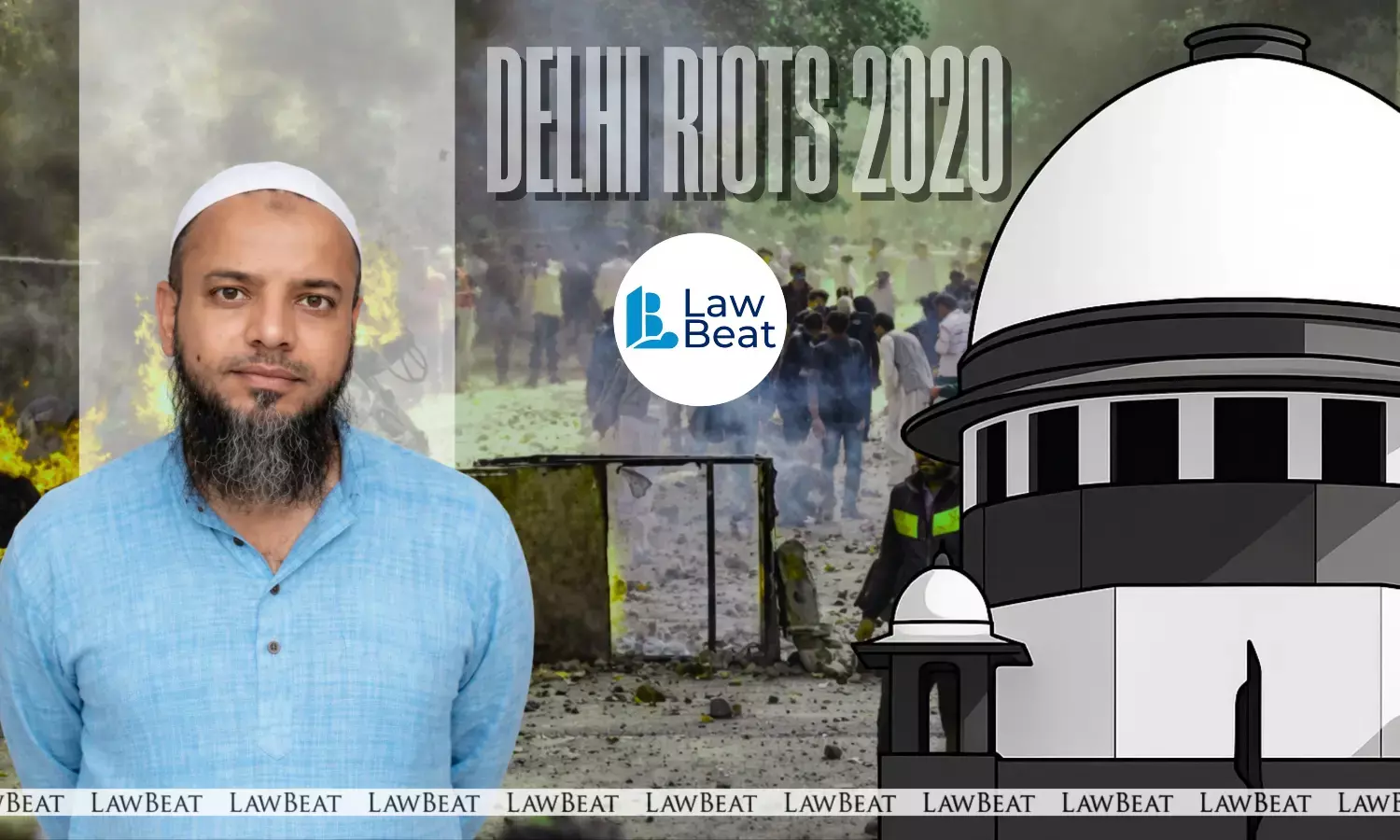
Supreme Court grants time to Delhi Police in bail pleas of Tasleem Ahmed and Khalid Saifi in Delhi riots conspiracy case
The Supreme Court of India on Wednesday issues notice on a plea filed by United Against Hate member Khalid Saifi, challenging the denial of bail by the Delhi High Court in a case alleging a larger conspiracy behind the 2020 Delhi riots, involving charges under the Indian Penal Code and the Unlawful Activities (Prevention) Act (UAPA).
The bench of Justices Aravind Kumar and P.B. Varale, however, orally makes it clear that Saifi cannot claim parity with the Supreme Court’s January 2026 judgment that granted bail to five co-accused in the same case.
Saifi approached the apex court against the Delhi High Court’s September 2, 2025 order refusing him bail. In January, the Supreme Court granted bail to five accused, including Gulfisha Fatima, while rejecting bail pleas of Umar Khalid and Sharjeel Imam. Subsequently, the remaining accused, Tasleem Ahmed and now Khalid Saifi, move the Supreme Court. Notice has already been issued in Tasleem Ahmed’s petition, and Saifi’s plea is tagged with it.
According to Saifi’s petition, he has spent nearly five years in custody and seeks bail on grounds of prolonged incarceration, claiming parity with those recently enlarged on bail by the Supreme Court.
At the outset, Justice Aravind Kumar asked Advocate Rajat Kumar, appearing for Saifi, about the role attributed to the accused. The counsel submitted that Saifi is alleged to be a member of several WhatsApp groups, including DPSG, CAB Team and United Against Hate, and to have been involved in creating protest sites at Khureji, Karawal Nagar, Kardam Nagar and Nizamuddin. He is also accused of delivering inflammatory speeches intended to incite communal violence.
The prosecution further alleged that Saifi sent a message on the DPSG WhatsApp group instructing members to cover CCTV cameras installed by the police with black tape.
Counsel for Saifi argued that while he may have been associated with the protest site at Khureji, there is no material to show his involvement at other protest locations. He also contended that no communal riots took place at the Khureji protest site and that there was no recovery of weapons or other incriminating material.
Justice Kumar, however, orally rebuffed the parity argument, remarking, “You want to incite people to communal riots and then you claim parity with those five persons? If you are claiming parity on our judgment, we will straightaway say no.”
Responding to the submission that no violence occurred at the protest site allegedly handled by Saifi, the bench observed that physical violence at the same location is not a prerequisite. Justice Kumar noted that incitement at one place leading to violence elsewhere would still attract criminal liability, adding that the 2020 riots resulted in the deaths of over 150 people, including police personnel.
Although the Court initially expressed reluctance to pass any order, it subsequently issued notice in Saifi’s plea and directed that it be heard along with the petition filed by Tasleem Ahmed.
Notably, on February 6, 2024, the Delhi High Court had expressed concerns regarding the protracted arguments presented by the prosecution in the bail plea hearing of Khalid Saifi. It had also expressed its dissatisfaction with the seemingly endless arguments put forth by the prosecution.
Emphasizing that the court is tasked with adjudicating bail pleas and not appeals against convictions or acquittals, the bench had underscored the necessity for succinct arguments.
A trial court had dismissed Saifi's bail plea, stating that the allegations against him seemed prima facie true. Senior Advocate Rebecca John had argued that Khalid Saifi was falsely implicated and that the entire case of the prosecution remained unsubstantiated and devoid of evidence. She had submitted that the prosecution relied on a WhatsApp Group called "DPSG." However, Khalid Saifi's participation in the said group was only peripheral and could not be used as evidence of any criminal conspiracy. SPP Amit Prasad had submitted that Khalid Saifi was a member of the WhatsApp group DPSG, CAB Team, and United Against Hate (UAH) Okhla. He had also alleged that Khalid attended a meeting in Jangpura, Delhi, which was also attended by Umar Khalid, Sharjeel Imam, Meeran Haider, and others.
Allegedly, Khalid Saifi also attended the meeting on December 26, 2019, at Lodhi Colony, after which DPSG was created on December 28, 2019.
Case Title: Abdul Khalid Saifi v. State (NCT of Delhi)
Bench: Justices Aravind Kumar and Prasanna B Varale
Hearing Date: February 18, 2026