
Arvind Kejriwal Row: CJI Urged To Act Over Allegations Against Delhi HC Judge
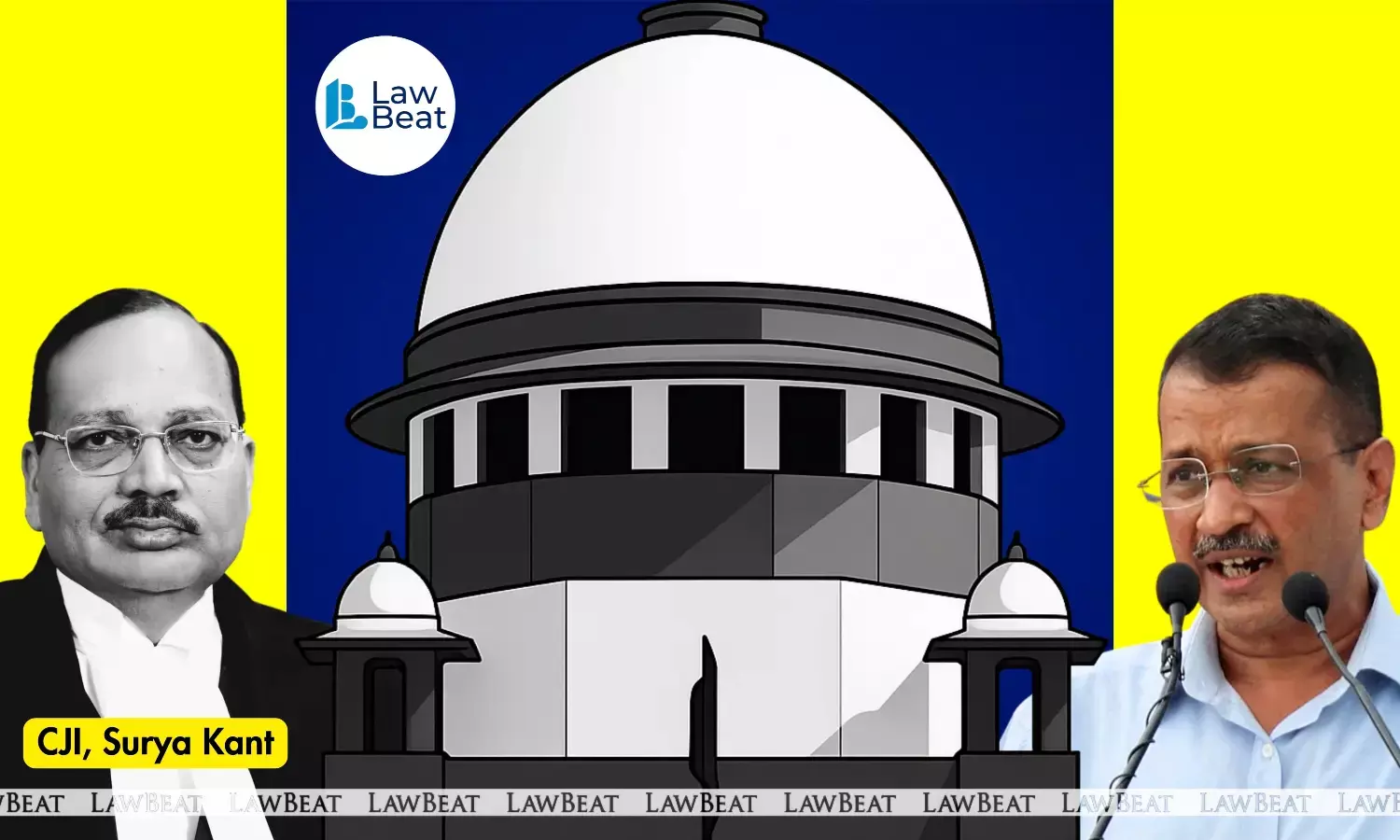
Arvind Kejriwal controversy over allegations against Delhi High Court judge reaches Supreme Court
A group of Senior Advocates, academicians, and former public officials have written to the Chief Justice of India (CJI) Surya Kant raising serious concerns over reports that Arvind Kejriwal made allegations against a sitting judge of the Delhi High Court, Justice Swarana Kanta Sharma and sought transfer of his case from her court.
In a detailed representation addressed to the CJI at the Supreme Court of India, the signatories cautioned that permitting litigants to level unsubstantiated allegations against judges or seek a Bench of their choosing would strike at the heart of judicial discipline and independence.
The representation states that the alleged conduct raises “serious and unprecedented concerns,” emphasising that it is a settled principle of law that litigants cannot choose the Bench before which their matters are heard. It further underlines that publicly attributing bias or improper motives to a sitting judge, without substantiated basis, undermines judicial propriety, ethics, and institutional integrity.
Warning of broader consequences, the signatories noted that allowing such actions to go unchecked could set a dangerous precedent. “It would enable litigants to undermine the authority of courts and erode public confidence in the administration of justice,” the representation states, urging the top court to take cognisance of the issue.
The group has specifically called upon the Chief Justice to consider appropriate action in accordance with law, including the possibility of initiating suo motu proceedings if deemed necessary to safeguard the dignity of the judiciary.
A separate but related representation submitted by members of the Bar goes a step further, urging the initiation of suo motu contempt proceedings in connection with the alleged remarks against Justice Swarana Kanta Sharma of the Delhi High Court.
Relying on established principles under the Contempt of Courts Act, 1971, the signatories argue that making baseless allegations against judges could amount to criminal contempt. They point out that the law covers acts which scandalise or tend to scandalise the authority of courts, lower the authority of the judiciary, or interfere with the due course of judicial proceedings.
The representation draws support from past rulings of the Supreme Court, including In Re: Arundhati Roy (2002) and the Prashant Bhushan Contempt Case (2020), where the Court underscored that imputing motives to judges and making unfounded allegations can erode public trust and constitute contempt of court.
“The credibility of the judicial system depends upon the perception that judges act impartially and without fear or favour,” the representation notes, adding that legal remedies such as appeals or transfer petitions cannot be used as a vehicle to publicly cast aspersions on the integrity of judges.
Highlighting the role of the Bar as a constitutional stakeholder, the signatories said they were duty-bound to bring the issue to the Court’s attention. They stressed that any failure to act could embolden attempts to pressure courts or discredit judges in response to unfavourable orders.
Among those who have signed the representation are Senior Advocate Pinky Anand, Senior Advocate and former Delhi High Court Bar Association President Kirti Uppal, former Jharkhand DGP Nirmal Kaur, and several Vice Chancellors including Prof. Sunaina Singh, Prof. Neerja Gupta, and Prof. Vinay Kapoor. A number of other advocates have also endorsed the plea.
The signatories ultimately urged the Chief Justice to act as the “custodian and guardian of the judicial system” and take steps necessary to uphold the dignity, independence, and authority of the judiciary.
It is to be noted that former Delhi Chief Minister Arvind Kejriwal has approached the Supreme Court challenging the decision of the Delhi High Court Chief Justice rejecting his request to transfer the excise policy case from the bench of Justice Swarana Kanta Sharma to another judge. According to reports, Kejriwal has filed a petition under Article 32 of the Constitution of India. Along with this petition, he has also filed a Special Leave Petition challenging Justice Sharma’s order dated March 9.
In that order, Justice Sharma had stayed a trial court direction to initiate departmental proceedings against a Central Bureau of Investigation officer who had investigated the excise policy case. The High Court had also directed the trial court to defer proceedings under the Prevention of Money Laundering Act, 2002 and observed prima facie that certain findings recorded by the trial court while discharging Kejriwal and 22 others were erroneous.
Earlier, Justice Devendra Kumar Upadhyaya had declined Kejriwal’s request for transfer of the matter. In a communication sent through the High Court’s Registrar General on March 13 to eight applicants, including Kejriwal, the Chief Justice stated that the petition had been assigned to Justice Sharma in accordance with the existing roster.
“The petition is assigned to the Hon’ble judge as per the current roster. Any call of recusal has to be taken by the Hon’ble judge. I, however, do not find any reason to transfer the petition by passing an order on the administrative side,” the communication quoted the Chief Justice as saying.
Kejriwal had written to the Chief Justice on March 11 expressing apprehension that if the matter continued before Justice Sharma, the case “may not receive a hearing marked by impartiality and neutrality.”
The controversy arises from the proceedings linked to the now-scrapped Delhi excise policy case. On February 27, a trial court had discharged Kejriwal and 22 other accused persons in the case. The order was subsequently challenged by the CBI, and the revision petition is currently pending before Justice Sharma.
On March 9, while issuing notice in the revision plea, the High Court stayed the trial court’s direction for departmental action against the investigating officer and also asked the trial court to defer proceedings in the money laundering case, which is based on the CBI’s FIR.
Representation Date: March 17, 2026