
Excise Policy Case: CBI Files Caveats In Supreme Court As Kejriwal, Sisodia Seek Transfer of Proceedings
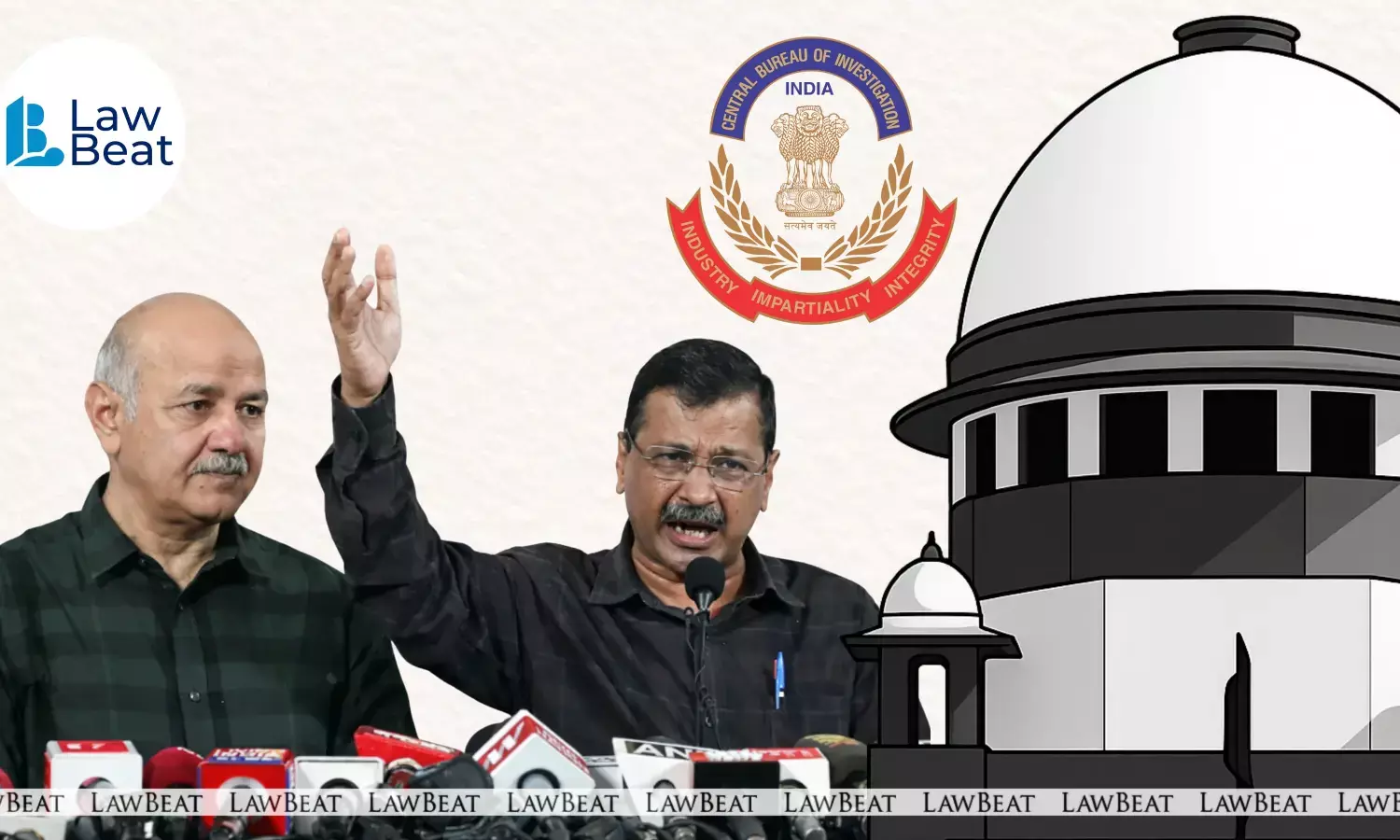
CBI moves Supreme Court with caveats in Delhi excise policy case as Kejriwal and Sisodia seek transfer of proceedings
The Central Bureau of Investigation (CBI) has filed caveat applications before the Supreme Court of India in connection with petitions moved by former Delhi Chief Minister Arvind Kejriwal, senior AAP leader Manish Sisodia and other accused in the Delhi excise policy case.
The caveats have been filed to ensure that no orders are passed by the Supreme Court without first hearing the agency.
A caveat application is typically moved when a party anticipates urgent listing and seeks an opportunity to present its case before any interim relief is granted.
According to reports, three separate caveats have been lodged by the CBI in response to Special Leave Petitions (SLPs) filed by Kejriwal, Sisodia and others. The petitions challenge orders passed by the Delhi High Court and seek transfer of proceedings.
At present, the SLPs are reflected as “under defect” on the Supreme Court’s website, indicating that certain procedural requirements are yet to be completed before the matter can be formally listed.
The petitioners have approached the apex court under Article 32 of the Constitution seeking transfer of the case from the Bench of Justice Swarana Kanta Sharma. They have raised concerns over certain remarks made during earlier hearings, particularly in bail proceedings linked to the excise policy case. It has been contended that certain prima facie observations made during prior hearings give rise to a reasonable apprehension regarding the fairness of future proceedings.
The plea also refers to a recent development where Justice Sharma, while hearing the CBI’s appeal against a trial court order discharging all accused, stayed the trial court proceedings.
According to reports, Kejriwal has filed a petition under Article 32 of the Constitution of India. Along with this petition, he has also filed a Special Leave Petition challenging Justice Sharma’s order dated March 9.
In that order, Justice Sharma had stayed a trial court direction to initiate departmental proceedings against a Central Bureau of Investigation officer who had investigated the excise policy case. The High Court had also directed the trial court to defer proceedings under the Prevention of Money Laundering Act, 2002 and observed prima facie that certain findings recorded by the trial court while discharging Kejriwal and 22 others were erroneous.
Earlier, Justice Devendra Kumar Upadhyaya had declined Kejriwal’s request for transfer of the matter. In a communication sent through the High Court’s Registrar General on March 13 to eight applicants, including Kejriwal, the Chief Justice stated that the petition had been assigned to Justice Sharma in accordance with the existing roster.
“The petition is assigned to the Hon’ble judge as per the current roster. Any call of recusal has to be taken by the Hon’ble judge. I, however, do not find any reason to transfer the petition by passing an order on the administrative side,” the communication quoted the Chief Justice as saying.
Kejriwal had written to the Chief Justice on March 11 expressing apprehension that if the matter continued before Justice Sharma, the case “may not receive a hearing marked by impartiality and neutrality.”
The controversy arises from the proceedings linked to the now-scrapped Delhi excise policy case. On February 27, a trial court had discharged Kejriwal and 22 other accused persons in the case. The order was subsequently challenged by the CBI, and the revision petition is currently pending before Justice Sharma.
On March 9, while issuing notice in the revision plea, the High Court stayed the trial court’s direction for departmental action against the investigating officer and also asked the trial court to defer proceedings in the money laundering case, which is based on the CBI’s FIR.
Bench: Supreme Court of India (hearing expected)